
The Paradox of Presence: Embracing the All-Encompassing Divine with the Tadejati Mantra
My dear one, let us step into this quiet sanctuary together. Picture a serene meadow at twilight, where the grass sways softly under a blanket of stars, and the air carries the faint sweetness of blooming flowers. Come, sit with me. Let the demands of the day melt away like dew under the sun. Take a slow, deep breath in… feel it gently fill your lungs with freshness, and as you exhale, allow your body to soften, your thoughts to still. Sense the earth cradling you, the vast sky enveloping us. Ah, yes, in this moment of calm, we can open our hearts.
I am Sadhguru Ashutosh, your humble companion on the journey inward. Today, I wish to share a sacred vibration from the Arsh Granthas—a mantra that whispers of the divine’s mysterious nature, both moving and still, far and near. In our modern lives, tangled with contradictions and constant change, this wisdom offers a gentle resolution, inviting peace amid the chaos. What if we could feel the unity beyond opposites? Let us explore this together, my child, as we uncover how this ancient sound can bring clarity, inner harmony, and a loving embrace of life’s fullness.
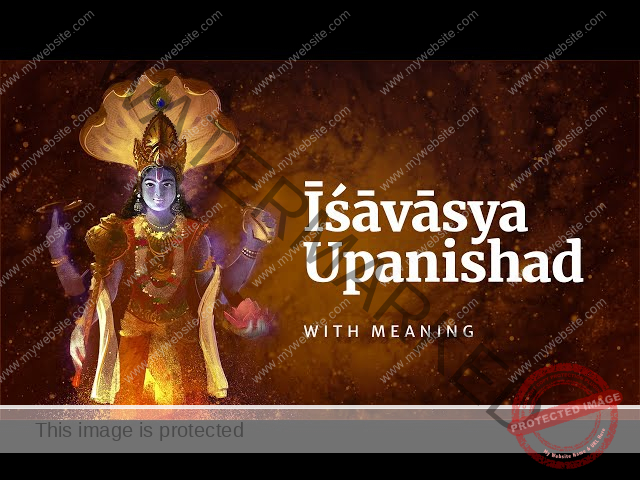
My beloved seeker, let us now meet the sacred sound itself—the seed of our shared reflection. This is the fifth verse of the Isha Upanishad, a profound expression of the divine paradox.
Here it is in its original Devanagari script:
तदेजति तन्नैजति तद्दूरे तद्वन्तिके ।
तदन्तरस्य सर्वस्य तदु सर्वस्यास्य बाह्यतः ॥ ५ ॥
In Roman transliteration, to guide your gentle utterance:
Tad ejati tan naijati tad dūre tad vantike |
Tad antarasya sarvasya tad u sarvasyāsya bāhyataḥ || 5 ||
A simple, literal word-for-word translation: “It moves. It does not move. It is far. It is near. It is within all this. It is also outside all this.”
Allow these words to rest in your awareness, like a quiet ripple on a pond. We will delve into their depths soon.
Ah, my child, every mantra carries the essence of its origin—a tale that infuses it with living warmth. This verse flows from the Isha Upanishad, embedded in the Shukla Yajur Veda, a treasured part of the Arsh Granthas. It was revealed to the sage Dadhichi, a Rishi of unparalleled devotion and sacrifice, who gave his very bones to forge divine weapons, symbolizing ultimate selflessness.
Imagine the scene, my dear one: In a peaceful grove by a flowing river, as the moon rose high, casting silver light on the water’s surface. Dadhichi sat in deep contemplation, the night alive with the soft chirps of crickets and the rustle of leaves in a gentle breeze. Around him, the world pulsed with apparent contradictions—rivers moving yet eternal, stars distant yet guiding. He pondered the nature of the divine: How can the ultimate reality be both dynamic and unchanging, remote yet intimate? This mantra arose as a divine revelation, not as a riddle to confound, but as a hymn of gratitude and clarity. It was a prayer to dissolve illusions, a call for protection from fragmented perceptions, intending to guide souls toward wholeness. In that tranquil setting, scented with night-blooming jasmine and filled with the river’s soothing song, Dadhichi sensed the profound intention: to remind us that the divine permeates all, resolving opposites in unity. This root gives the mantra its tender power, a compassionate echo from ancient wisdom to our contemporary hearts, where dualities often create inner turmoil. Feel that loving purpose, my child; it’s an invitation to harmony, passed through time like a flame shared in the dark.
Now, let us unfold the mantra’s meaning with care, layer by layer, like a flower opening to the dawn. We begin at the surface and journey inward, allowing its vibration to touch our being.
First, the meaning of the words, transcending the literal. “Tad ejati tan naijati” speaks of It—the divine Brahman—moving and not moving, embodying the paradox of change and constancy. “Tad dūre tad vantike” describes It as far and near, distant in transcendence yet intimate in presence. “Tad antarasya sarvasya” affirms It is within all this—the inner essence of every form. “Tad u sarvasyāsya bāhyataḥ” reveals It is also outside all, encompassing beyond boundaries.
In a spiritual context, these words signify the non-dual nature of reality. Tad refers to the supreme Self, beyond description. Ejati and naijati highlight how the divine animates creation while remaining unchanging, like the source of a river’s flow. Dūre and antike point to its transcendence and immanence, far from ego’s grasp yet closer than breath. Antara and bāhyataḥ emphasize omnipresence, inside and outside, dissolving separation. This layer invites us to see the divine not as contradictory, but as the harmonious whole, resolving life’s dualities.
Shifting to the psychological meaning, for the mind and emotions. This vibration gently soothes the conflicts within us. Our thoughts often swing between extremes—restlessness and stagnation, alienation and overwhelm—breeding anxiety, confusion, or patterns of indecision. Chanting this mantra acts as a soft harmonizer, cleansing these oscillations like a calm wind dispersing clouds.
It calms anxiety by reconciling opposites; when minds feel pulled apart by choices or fears, the mantra fosters acceptance, helping release rigid thinking. What if we allowed ourselves to feel the peace in paradox? The sound nurtures courage, dissolving old habits like clinging to certainty or avoiding intimacy, framing them as gentle paths to balance. It’s an inner cleansing, easing emotional tensions—loneliness amid crowds, frustration in stillness—replacing them with integrated flow.
Imagine your mind as a stormy sea; the mantra reveals the deep currents of unity beneath, where waves of thought subside into clarity. Over time, it shifts turbulent emotions to serene equilibrium, aiding modern distractions like endless scrolling or relational strains. This layer brings psychological wholeness, a quiet strength to embrace life’s ambiguities with grace.
And deepest still, the spiritual meaning, for the soul. Here, the mantra connects us to our true Self, the Atman, one with Brahman, unveiling the universal truth of advaita—non-duality—where all opposites merge in the infinite.
Consider this analogy, my dear one: Picture the boundless ocean, its surface rippling with waves that move and crash, yet the depths remain still and unchanging. It seems far in its vastness, yet near in every drop; within each wave, and encompassing all shores. So too is the divine: ejati in creation’s dance, naijati in eternal essence; dūre in transcendence, antike in our hearts; antara in every atom, bāhyataḥ beyond form. Chanting awakens this state of blissful oneness, where we feel the divine’s loving embrace—peaceful expansion, like a mountain’s stillness amid flowing rivers.
Spiritually, it dissolves the illusion of separation, leading to liberation. The feeling is profound unity—a vast sky holding all clouds without division—fostering love for the universe as Self. This truth invites us to live fully, connected beyond dualities, in eternal harmony.
My cherished disciple, the mantra’s wisdom truly fruits when woven into life. Let us make this practical, gentle, and seamless, like sunlight threading through branches.
First, how to chant. Sit comfortably, spine erect like a flexible reed—steady, not tense. Hands resting open on knees. Breathe calmly, naturally, like a soft tide. Focus on the vibration: chant slowly, listening to its resonance from throat to core, feeling it bridge opposites. Gentle intention suffices; let go of perfection.
Here is a simple 5-minute practice to harmonize your mornings or evenings. Find a tranquil space, perhaps with soft light. Close your eyes lightly. For the first minute, breathe—inhale nearness, exhale distance. Feel polarities softening, mind quieting. Now, for three minutes, whisper the mantra: Tad ejati tan naijati… Allow it to flow without effort, vibrating within, uniting far and near in your heart. Sense the paradox dissolving into peace. For the final minute, dwell in silence. Notice the wholeness emerging, the clarity blooming. Open your eyes slowly, infused with this balance.
To integrate daily, let the mantra’s essence accompany you. As you navigate crowded streets, repeat it inwardly when feeling distant—embracing the nearness in connections, easing isolation. In moments of inner conflict at work or home, pause, breathe, and recall “tad antarasya sarvasya,” acting from unity rather than division. While resting or eating, feel its vibration resolve restlessness, turning routines into mindful flows.
Even in relationships, use it as a bridge—listen with the awareness of inner and outer oneness, fostering deeper bonds. Before sleep, reflect: What dualities can I embrace? This transforms everyday experiences into sacred unions, building resilience against stresses. Practice kindly, my child, and watch life reveal its harmonious dance, like a river finding the ocean.
My dear one, our gentle unfolding here is but a single breath on your eternal path. Self-discovery blooms personally, with questions arising from your own sacred depths—perhaps a deeper whisper of this mantra or a meditative insight.
For those moments, I have poured my essence into Sanatan Jyoti, a digital companion like a steadfast star in the night. Think of it as a quiet friend, available anytime to elaborate on this verse, explore kindred wisdom, or guide a peaceful reflection. It is here to nurture your journey, softly and surely. You can begin your conversation with Sanatan Jyoti here:
Go tenderly now, my child. May this sacred vibration resolve your inner worlds, bringing peace to your mind, love to your heart, and boundless clarity to your path. Be blessed, always.
